.webp)

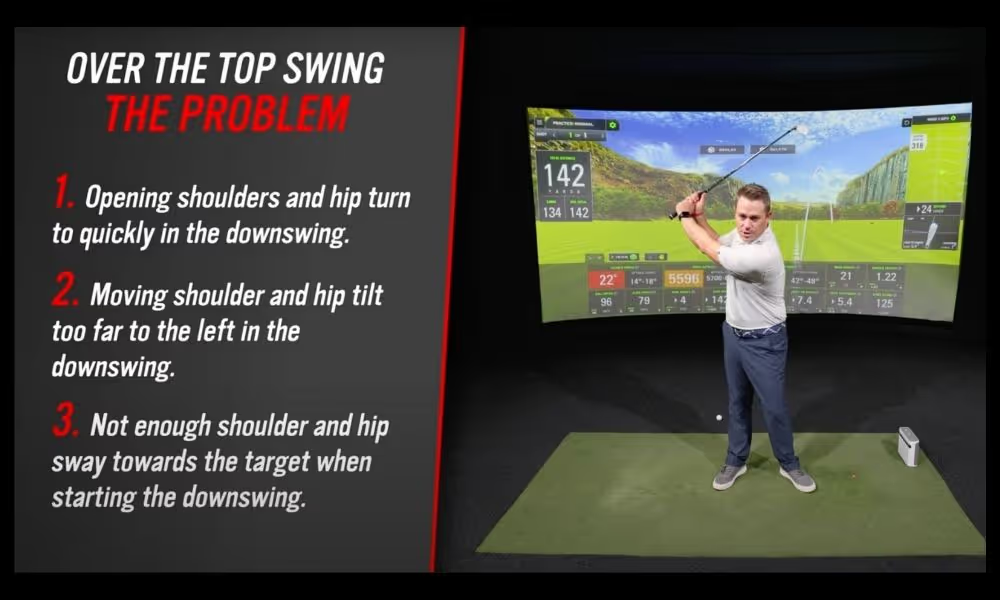

As golfers age, a natural decrease in flexibility and muscle speed often leads to a noticeable loss in driving distance. Many senior golfers attempt to compensate for this loss of mobility by forcing speed with their arms, introducing critical swing faults that further destroy distance and accuracy. Drawing from GOLFTEC’s database of millions of swings, this guide identifies the top 3 swing faults caused by aging and offers data-driven mechanics fixes to restore lost yards without risking injury.
Table of Contents:
What You’ll Learn
- Why the slice happens and how an over‑the‑top swing leads to it
- 3 drills—staggered stance, head‑cover cue, and delayed upper-body rotation—that cure slicing
- Pro tips on timing, sequencing, and feel for consistent, straighter shots
What Causes the Golf Slice?
The slice usually starts with an over‑the‑top move— opening your shoulders and hips too early in the downswing. Instead, shift slightly toward the target to encourage an inside‑out club path.
How to Fix an Over‑the‑Top Swing (3 Simple Drills)
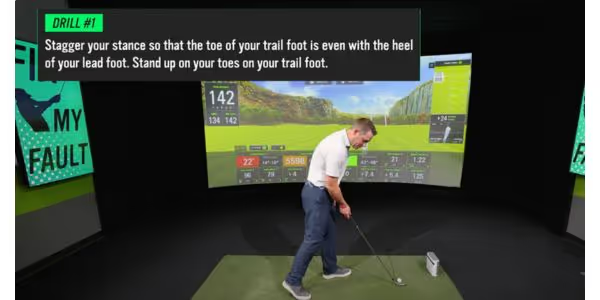
1. Staggered Stance & Trail-Toe Lift
Set your trail foot back so the trail toes align with the lead heel and rise slightly on your toes. This setup encourages proper rotation and keeps your swing path encouraged toward the inside.
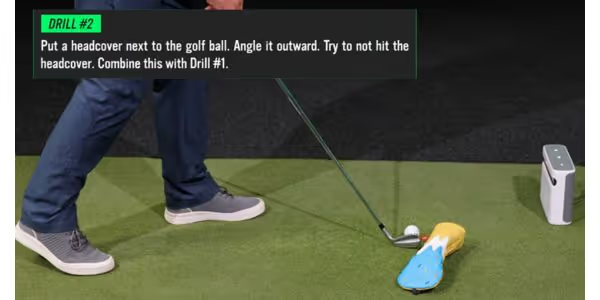
2. Head Cover Drill — Train Inside‑Out Path
Place a soft head cover just right of your ball, angled slightly outward. Make slow, controlled swings—this visual cue trains the club to move inside‑out.
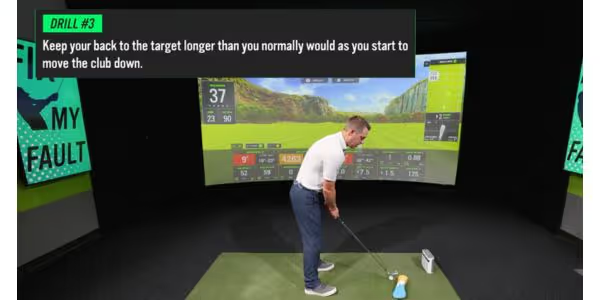
3. Keep Your Back Facing the Target Longer
On the downswing, delay rotating open. Let your back stay pointed at the target, lowering the club handle first to build proper sequence and deliver the club from the inside.
Watch how to execute the drills correctly!
Ready to Fix Your Slice?
Book your Swing Evaluation today and get started on your journey to better golf!

Play the best golf of your life. GOLFTEC Coaches use cutting-edge tech and proven methods to level up your game fast.
Book a Lesson
Play Better!
Book a Fitting
Play Better!