The banner is to inform visitors of an important message

.webp)
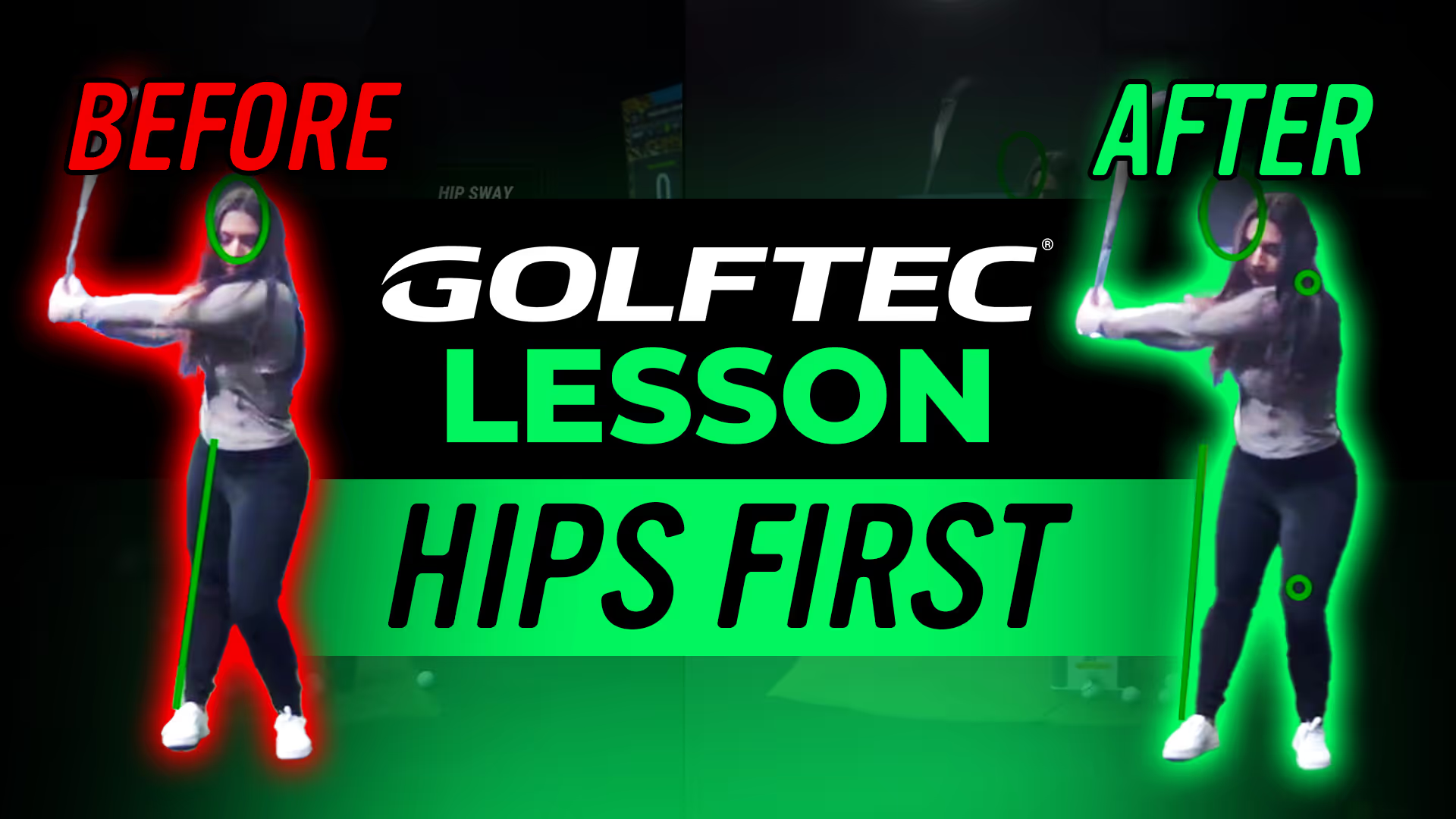
What You’ll Learn -Why keeping too much weight on your trail foot leads to chunked iron shots -How shifting weight earlier in the downswing improves contact -How club path affects pulls and inconsistent direction -A simple noodle drill to train the correct hand path -How exaggerating weight shift can help build the right motion
0:00
Coach: Payton’s back—this is lesson number five.
Payton: Lesson five.
0:03
Coach: Alright, looks like we’re working on full swing today based on the club you’ve got.
Payton: Yep. I went to the range—not the course—but I’m still missing left and right. Haven’t quite figured out the path yet.
0:14
Coach: Got it. How’s your contact?
Payton: Pretty good overall. My miss is chunking it, but when it’s good, it’s good.
0:21
Coach: Perfect. Let’s take a look and see what we need to work on.
0:32
Coach: Go ahead and hit a few shots so we can see what’s going on.
0:51
Coach: Alright—you might be ready to teach me based on those. You hit them close to your target and pretty far. That’s good progress.
But there are a couple things we want to clean up.
1:04
Coach: First, your club path is about 3° out-to-in, which explains why you’re seeing pulls.
Ideally, we want your hands working more under your shoulder—not cutting across your neck and head.
1:16
Coach: Second, let’s talk about weight distribution.
You start around 50/50, which is great—but in the downswing, you still have about 70% of your weight on your trail foot.
That’s a big reason for the chunked shots.
2:07
Coach: We’re going to work on two things:
2:25
Coach: We’ll use a noodle on the ground to help with path. You’ll need to keep your hands deeper and avoid coming over the top.
For weight shift, I want you to exaggerate it—get to about 70% on your lead side earlier in the downswing.
2:53
Coach: Let’s start without a ball. Just make some rehearsal swings—keep it to about half to three-quarter length.
3:53
Coach: What feels different?
Payton: I feel like I’m shifting earlier—almost like I’m stepping forward.
Coach: That’s good. Exaggerate it even more.
4:06
Coach: As you start down, really push into your lead side. It might feel like you’re stepping—that’s okay.
4:23
Coach: What’s the biggest change now?
Payton: My weight is shifting sooner—it just feels different.
4:34
Coach: Let’s do one more and hold your finish—don’t lose your balance.
4:56
Coach: Good. Now hit one with that same feeling—short swing, early shift.
5:10
Coach: That was really good.
You got much closer to 50/50 in the downswing, and your hips moved significantly more toward the target.
5:35
Coach: Even better—your club path improved from about 3° out-to-in to 3–4° in-to-out.
That’s a huge difference.
5:48
Coach: This is how you should practice:
That puts your hands and club in better positions and improves your contact.
6:20
Coach: Really nice work today.
Payton: Thank you—that was awesome.
Ready to elevate your game? Book a lesson or fitting at your nearest GOLFTEC location today!


Enter your info to have one of our expert coaches reach out about lessons, club fittings or practice!







.avif)
.avif)
.avif)
.avif)
.avif)
.avif)
.avif)
.avif)