The banner is to inform visitors of an important message

.webp)
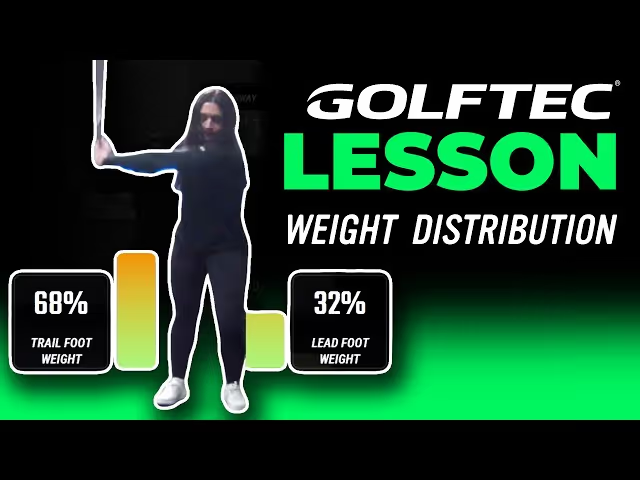
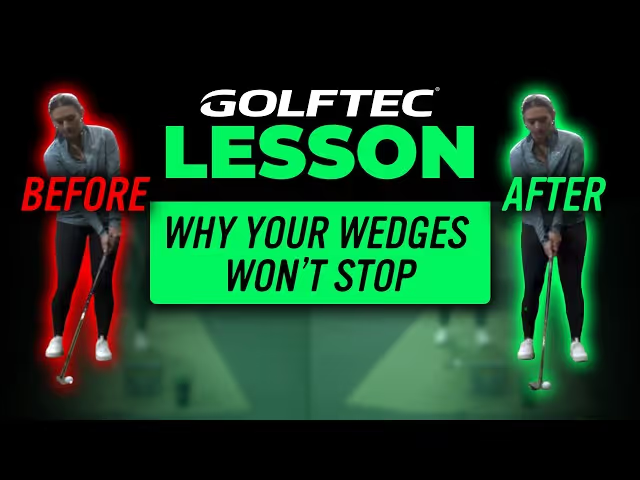
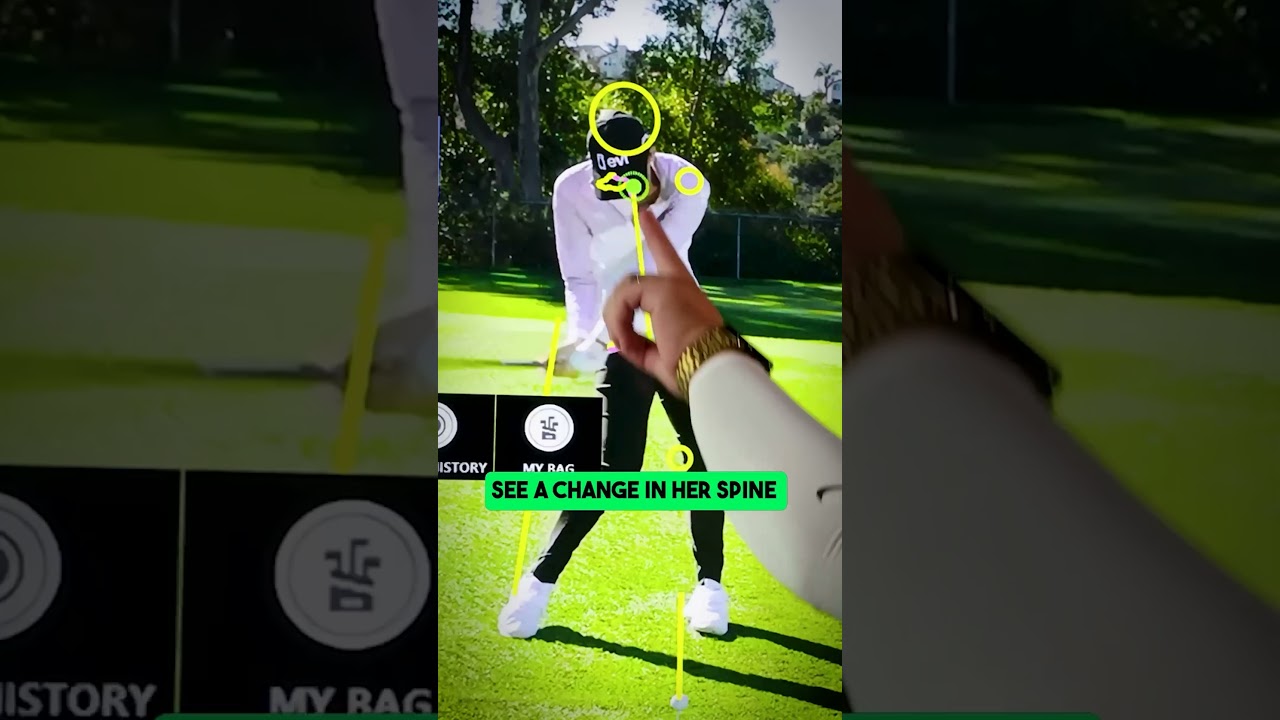
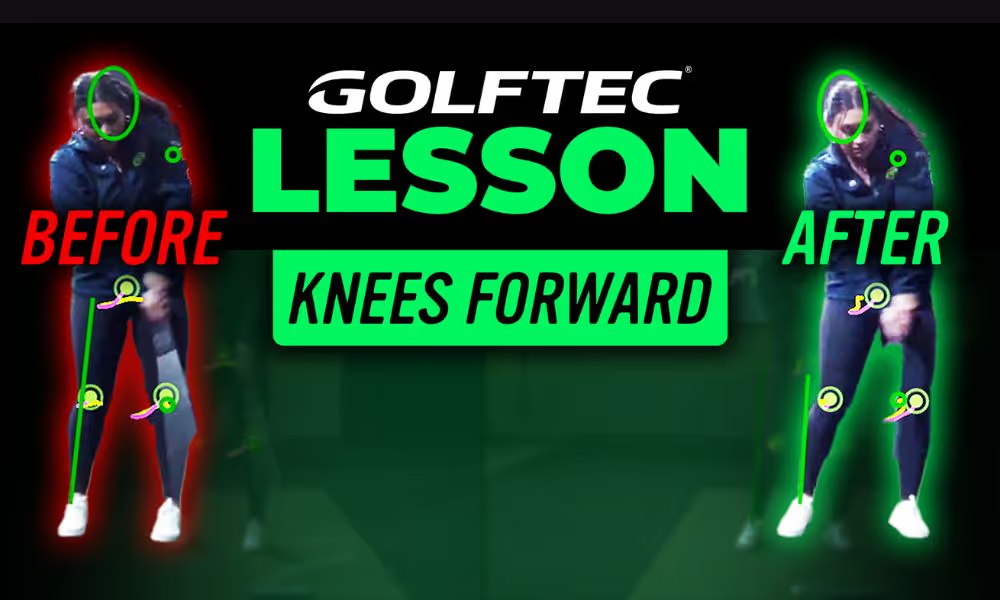
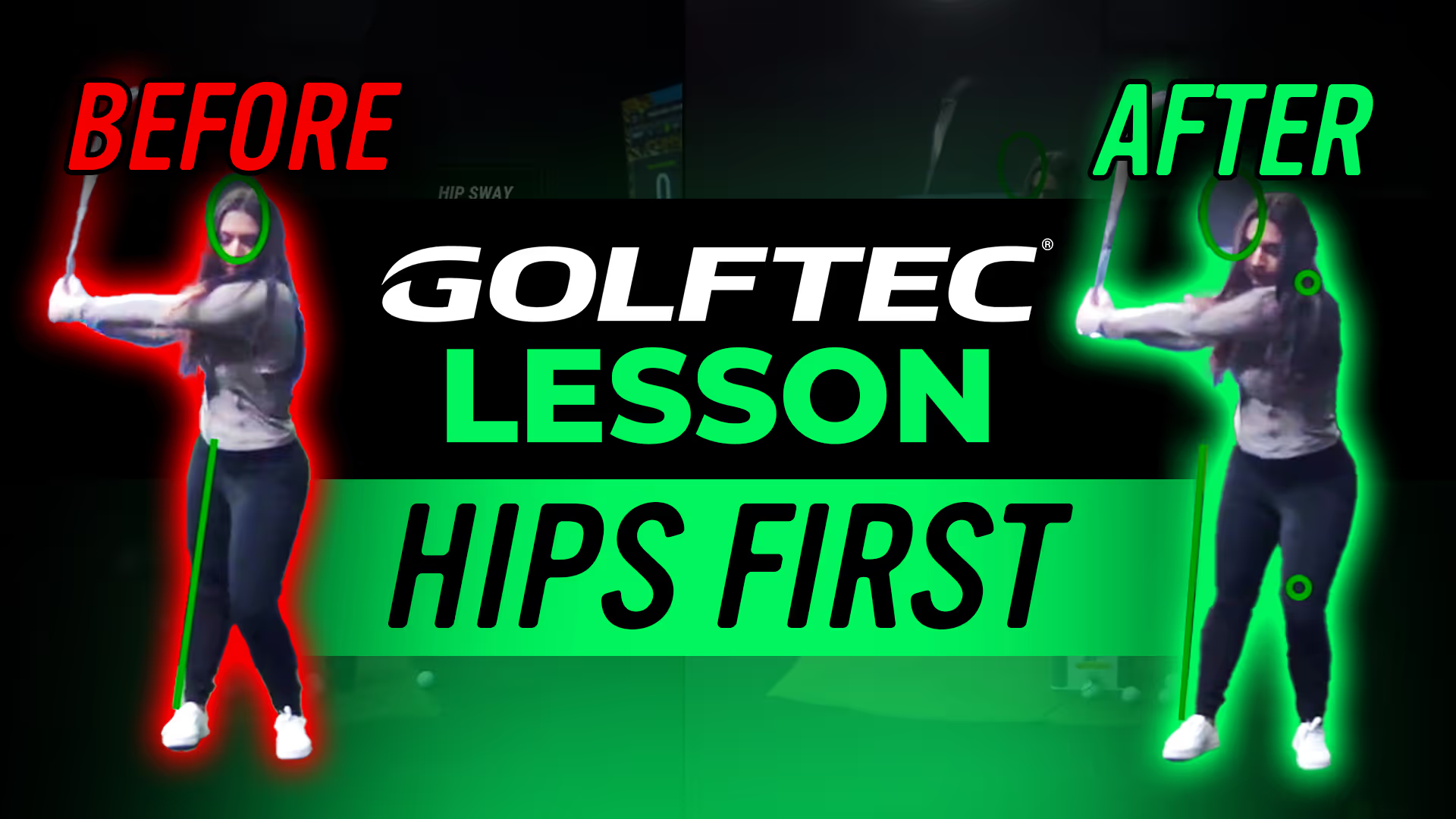
Check out Payton's first GOLFTEC lesson using our OPTIMOTION technology! Watch her make a simple change that leads to straighter, more solid contact. Using data and clear visual checkpoints, the lesson breaks down how a slice pattern is created, as well as how to fix it.
00:00:00 - Payton and I are starting your first data-driven GOLFTEC lesson to analyze your swing and identify areas for improvement.
00:00:22 - Payton, please take some swings with the seven iron so I can observe your current technique without worrying about performance.
00:00:40 - The golfer has been playing occasionally for five years, struggles with consistently hitting shots to the right, and tends to hit the ground before the ball with drivers and woods.
00:01:40 - The distance is generally consistent with good contact, and the speaker has mostly played eighth grade golf with limited lessons, mainly on putting rather than irons.
00:02:23 - The best golfers turn their shoulders about 88 degrees at the top of their backswing to hit the ball far and straight, and Payton's 90-degree shoulder turn at address is very close to this ideal.
00:03:06 - Your shoulder turn is 10° less than ideal, causing your hands and club to move incorrectly and resulting in a slice, so you need to turn your shoulders more and move your hands behind you to hit the ball straighter.
00:03:47 - The lesson focuses on using two noodles to guide proper hand movement and swing direction in the backswing to improve golf accuracy and avoid slicing the ball.
00:04:24 - The instructor explains how to use an angled visual aid and an orange noodle near the shoulder to guide proper hand and club movement during the backswing without hitting the noodle.
00:05:02 - The goal is to make controlled swings with the club traveling on a better path, aiming to shift the path number's arrow from left to right while maintaining a similar or higher value.
00:05:45 - They plan to practice several times to get a sense of how to move, regardless of whether the top is pointed left or right.
00:06:04 - The coach advises Peyton to make a smaller, controlled swing focusing on arm and hand movement to achieve shorter, more precise shots around 30 to 40 yards instead of longer ones.
00:07:04 - The main focus was on improving your swing by turning more and bringing your hands closer to your body, which felt strange but helped create a noticeable difference in your arm position and ball curve.
00:07:46 - You're now close to the tour average swing angle of 88°, with increased ball speed from hitting the ball more solidly, and the next steps are to get the ball airborne more and improve directional control by swinging the club on the right path.
00:08:25 - The path shifted more to the right instead of the left, making it a great first lesson.
⛳ Payton's main issue is consistently hitting the golf ball to the right, especially with irons and woods.
🎯 The lesson focuses on using data-driven analysis and visual aids like noodles to help correct swing path and shoulder turn.
🌀 Payton's swing was too vertical, with hands lifting above the head instead of moving around the body, causing slices.
🔄 The instructor emphasizes turning the shoulders more and moving the hands behind the body to achieve a better swing path.
📈 After adjustments, Payton increased shoulder turn closer to tour average and gained 7 mph in ball speed.
👀 Visual feedback and simple drills helped Payton quickly see and feel the difference in swing mechanics.
💡 The biggest takeaway for Payton was keeping hands closer to the body and turning more, which stopped the ball from going right.
👏 Rapid improvement was seen within just a few swings, showing the effectiveness of targeted, data-driven instruction.
00:00:00 - I've got Payton here with me. We are going to do your first ever GOLFTEC data driven lesson. Are you excited? >> I'm excited, but nervous. >> Don't be nervous. Don't be nervous. This is really This isn't that scary. I promise. So, [music] let's dive in. Let's take a look at what your swing looks like, and we'll talk through what we need to work on. [music]
00:00:22 - >> All right. So, Payton, what I want you to do, I want you to hit a few shots for me. Okay? You have a seven iron there. Just make some swings. cuz I just want to kind of see what you do right now. Doesn't matter whether it's good, bad, great, no no big deal. So, um you just make some swings and we'll kind of talk about what we see.
00:00:40 - >> So, while you're doing this, just to give everybody a little bit of background on your golf and like what you've done so far, like talk to me a little bit about your experience, your frustrations. >> I have been golfing like every now and then for 5 years, like the occasional weekend golfer. >> Okay. Um, but I always hit it right [music] and >> like that. >> Like that. It always goes right. My driver is my best club. I just like hitting it far. >> Okay. >> Um,
00:01:11 - but I'd say I'm on average okay, but it always goes right. Okay. >> I never normally go left. >> Always goes right. How is contact generally? Would you say you hit it pretty well? hit the ground sometimes before the golf ball. >> With irons, I hit it pretty [music] well. With a driver, I will hit the ground first, which is weird. And same with like woods. I'll hit before the ball. >> Okay, fair enough. Hit a couple more and then we'll take a look at what's going on.
00:01:39 - >> There's your There's your way to the right. [laughter] >> Yeah, >> that's okay. >> How's the distance overall based off of just like the people you play with or like people that you feel like are similar abilities? I feel like pretty the distance is always pretty similar as long if it if I hit have good contact on it, it's pretty good. >> Okay, fair enough. >> What have you done as far as lessons in the past? Anything? >> I played eighth grade golf. >> Okay, [laughter] perfect.
00:02:06 - >> So, tons of instruction. >> That was about it. I've had a lesson or two, but mainly on putting, never really on irons. So, >> perfect. Hit one more and then uh then we'll take a look.
00:02:23 - So, Payton, let's take a look at your swing. Um, I've got a tour player up here. I don't need you to swing like this golfer. This is just an example of what I want you to do a little bit more of. So, um, I want you to watch over here on the right hand side. Notice how as this golfer makes his back swing and goes all the way to the very, very top, how his hands and club move around his body. And you can see between these two yellow lines how he does a really nice
00:02:44 - job of keeping [music] like his hands and club in sort of that cone right there. So the best players in the world, they turn their shoulders about 88 degrees by the time they get to the top of their back swing. This helps them hit the ball really far and really straight and not slice. Okay. So when we look at you, you'll see a pretty big difference. So you've got your shoulder turn at 90° open at a dress. That's really good. Tour players are at 8°. So you're
00:03:04 - really, really close here. But as you go back, watch the [music] difference of just how your hands and club move. You see how they start to move up and to the right [music] and your shoulder turn is at 32. So you're 10° less than where you should be here. If we keep going, you can see by the time your arms get to basically parallel to the ground, how your hands are cutting through like your ear. [music] And then if we go all the way to the top of the swing, you can see
00:03:24 - how you're basically lifting your hands and club straight above your head. Okay? Um that's not a really effective way to hit the ball straighter. So what we need to [music] get you to do is just turn your shoulders more and move your hands more behind you, more like this golfer over here on the right. And that's going to go a long way to helping you not [music] slice because what you're doing right now is swinging out to in or this direction where my finger's pointing.
00:03:44 - And that's a big reason why your ball curves to the right. >> Okay, >> make sense? >> Yep. Makes sense. >> So that's what we're going to work on. >> Okay, >> so we have a strict three noodle limit. We're at two, so we're close. Okay, [music] but what we're going to do, we're going to use both of these to help you get the understanding of how you need to move your hands in the club in the back swing. Okay, so we're get rid of this golf ball first. You don't need
00:04:01 - that quite yet. Go ahead and uh take your setup. Just pretend there's a ball there. this blue noodle that I'm gonna use. I'm gonna put this on the ground. This is going to represent the direction that I basically want you to be thinking of trying to swing the club. So, what you were doing previously, you had the swing kind of going this way. >> Okay. >> All right. [music] And when you do that, obviously, in order to get the ball to go close to your target, you need to
00:04:20 - leave the face open, and that's why it curves to the right. Okay? [music] Um, the best players, the ones who hit the ball the furthest, tend to swing more in this direction. So, see how it's angled ever so slightly kind of out to the right. M. >> So that's going to just provide you a visual to look at when [music] you're swinging, moving your hands and club more around your body. >> Okay. Good on the first part. >> Good on the first part. >> Okay. This orange noodle, it's going to
00:04:39 - go off of your shoulder right here. And what I want you to do with your arms and club is you make a back swing. Your objective is to not touch this. Think of this thing like filled with spikes. And if you hit it, it would impale your arm. That would be really bad. >> Okay. So, we're going to use this off of your shoulder as just a way to help you understand how to move your hands and club as you take take it back. >> Okay. >> Okay. Yep. >> So, we're going to practice a couple of
00:04:57 - these without a ball just so you can get an understanding of how to move. So, go ahead and take your setup. All right. Arms and clubs stay under this. And you don't have to go [music] super fast. There you go. That's fine. Perfect. Just make a couple of those swings. You can brush the turf as you go through. Feel how you just barely bumped into it. That's totally fine. So, same thing. Just try to avoid this as best you can. >> There you go. Good. >> All right.
00:05:18 - >> That's totally fine. So, that's really the objective that we're trying to work through. So, I'm going to have you make a couple swings. You're just going to chip a couple out there. You're not going to go super fast. And we're going to try to get that club to travel on a little bit better club path. Okay. If you do this correctly, you might push a couple, but the biggest thing that we're looking for is this number. See how that path number says 4.3 and has the arrow
00:05:37 - to the left? I want that number to be the basically the same or even bigger, but the arrow pointing to [music] the right. >> Right. Okay. >> Okay. So, I want that arrow instead of on the left hand side. I want it pointed out to the right. >> All right. >> Cool. >> Yep. >> Think you got this? >> Probably. We'll see. >> Okay. I don't care if you top it. Doesn't matter. >> Like, we're going to do this a few times. Just get a sense for kind of how we need to move.
00:06:04 - >> Good. Just barely touched it. Yep. >> Okay. So, I want you to try one without this. >> Okay. >> Good. So, with that uh swing, Peyton, what's a little What's different about that? >> I feel it's just weird going all the way around like I feel like I'm going farther than just straight up and [music] down. Yeah. >> Like, so you think the swing's bigger? >> Yeah. >> Okay, cool. It doesn't have to be bigger. Like, you don't have to, like I said earlier, you don't have to make a big massive swing,
00:06:34 - >> but I definitely want you to get your arms and hands traveling more around. >> Okay. The shots you were hitting before, we're going about call it 100 yards. >> I want these to go like 30 or 40. >> So, like that's kind of the [music] length and the speed that I want you to be thinking is I don't need you to go super fast. >> Okay.
00:06:52 - >> Good.
00:07:00 - Good.
00:07:04 - So, check this out. This is super cool. Okay, this is before, right? You had your hands up above your head like you're holding an lightning rod, like ready to get struck by lightning outside. Okay. Uh, so you were at 77°. So, really all we worked on was basically just trying to get you to turn more, right? You you told me it felt really weird. >> I would be shocked if it didn't feel weird. Okay. But like really what was the biggest takeaway that you had? Was it just turning more? Were you like
00:07:27 - moving your hands closer to your body? Like what were you >> Yeah, it felt your hands were closer to your body. So not all the way out here and then Yeah. turning a little more. And I wasn't hitting it right. So >> you were not hitting it right. That's very true. [laughter] You got the ball actually curving to the left a little bit. So you can see over here on the right hand side, this is like your after swing. So look at the difference of where your arms are. You see how much
00:07:46 - further behind you the club is? You've turned another uh what [music] is that? 8°. So, you're really close to the tour average now of 88, which is awesome. And then I threw this ball speed number up there because like if you looked at these, you'd go your hands are basically [music] at about the same height, right, as far as like how high you took them, but you got seven more miles an hour ball speed cuz you hit the ball more solidly over here, which is going to
00:08:05 - help you hit the ball further. So, that's super super cool. So, really nice job. That was like five, six, seven swings, something like that. That was super cool to see. So, there you go. That's kind of the first step. And then from there, what we would continue to do is, and what [music] we'll continue to do moving forward, is just get the ball up in the air a little bit more, control the direction a little bit better, but you've got to get the club swinging on the right path in order to do some
00:08:25 - [music] of these things. So, we saw the path kind of shift more out to the right over here as opposed to going too far to the left on this one. So, awesome. It was good. Great job. Great first lesson. [music]
Ready to elevate your game? Book a lesson or fitting at your nearest GOLFTEC location today!


Enter your info to have one of our expert coaches reach out about lessons, club fittings or practice!



.avif)
.avif)
.avif)